Does ProDentim Really Work? An Evidence Check
The short answer: ProDentim can plausibly help with breath and gum health as an add-on to brushing and flossing, but it cannot do the dramatic things some adverts imply. Here is the reasoning.
Key takeaways
- Oral probiotics have real, if modest, clinical evidence for reducing gum bleeding, plaque and bad breath.
- ProDentim uses species from that research, but the finished product has not been clinically tested and strain doses are undisclosed.
- It does not regrow gums, regrow teeth or reverse cavities. Nothing sold as a supplement does.
- Give it 8 to 12 weeks of daily use alongside normal oral hygiene before judging.
How does ProDentim work?
ProDentim is built on the "oral microbiome" model of dental health. Under this view, a healthy mouth is not a sterile one. It is one where beneficial and neutral bacteria dominate and keep harmful species in check by competing for space and nutrients, producing substances that inhibit them and calming the local immune response.
Each ProDentim tablet delivers live bacteria directly to the mouth as it dissolves. The intended chain of events is:
- Beneficial strains adhere to the tongue, gums and tooth surfaces.
- They compete with plaque-forming and odour-producing bacteria.
- With daily use, the overall balance shifts, leading to less inflammation and fresher breath.
The model itself is mainstream science. The question is how far a supplement can push it.
What the research on oral probiotics shows

Dozens of randomised controlled trials have tested probiotics for oral health, and several systematic reviews have pooled them. The consistent findings are:
- Gum bleeding and gingivitis: probiotic lozenges, most often Lactobacillus reuteri, produce small to moderate reductions in bleeding and gingival inflammation over 4 to 12 weeks.
- Periodontitis: when added to professional scaling and root planing, some probiotics improve pocket depth and attachment measurements slightly more than cleaning alone.
- Plaque: modest reductions in some trials, none in others.
- Bad breath: Streptococcus salivarius K-12 and some lactobacilli have reduced the sulphur compounds behind halitosis in small studies.
- Cavities: certain strains lower counts of Streptococcus mutans. Whether that translates into fewer cavities over years is not yet established.
Two limitations run through all of this. Effects are strain-specific, meaning a result for one strain of L. reuteri does not guarantee the same from another. And the benefits fade after people stop taking the probiotic, because the introduced bacteria do not usually colonise permanently.
So does ProDentim itself work?
Here is an honest scoring of the evidence.
| Question | Answer |
|---|---|
| Are its ingredients studied for oral health? | Yes, most of them |
| Is the delivery method appropriate? | Yes, a dissolving tablet is how trials deliver oral probiotics |
| Are the doses known to match the research? | Unknown, the blend is proprietary |
| Has the finished product been clinically tested? | No published trial |
| Is the manufacturer's "clinically proven" wording justified? | Only for ingredients, not for the product |
In practical terms, that makes ProDentim a product that is likely to help some people to a modest degree, particularly with breath and mild gum irritation, and unlikely to produce dramatic changes for anyone.
Does ProDentim regrow gums?
No. Gum tissue that has receded does not grow back in response to any supplement, toothpaste or rinse. Recession is managed by treating the cause (gum disease, aggressive brushing, grinding) and, where needed, by surgical grafting. Probiotics may help reduce inflammation so gums look and feel healthier, and reduced swelling is sometimes mistaken for regrowth, but new tissue is not being created.
Does ProDentim regrow teeth or reverse cavities?
No. Adult teeth do not regenerate. Very early enamel damage (white-spot lesions) can be remineralised by saliva, fluoride and calcium phosphate, but once a cavity has formed it needs a filling. If you have a visible hole, pain or sensitivity that lingers, book a dentist rather than a supplement.
Does ProDentim whiten teeth?
Not in any meaningful sense. The formula includes malic acid, which the brand links to whiteness, and reducing plaque can make teeth look cleaner. But ProDentim contains no peroxide or abrasive, which are what actually change tooth shade. One of the bonus e-books covers home whitening tips, which may be where the association comes from.
Is ProDentim good for your teeth and gums?
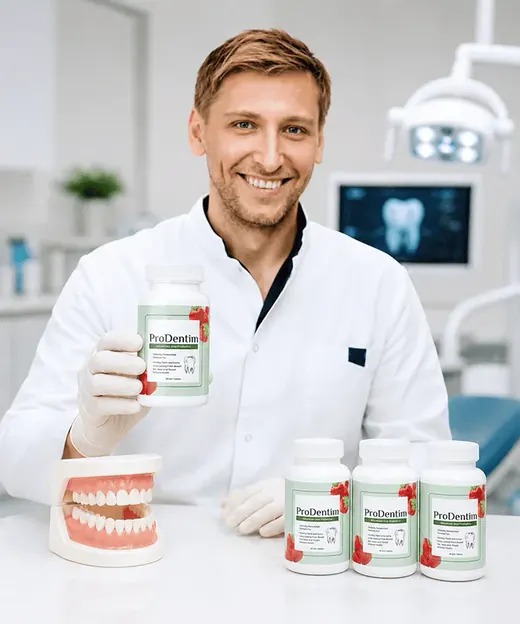
As part of a routine, it is reasonable. It contains nothing harmful to enamel at the amounts involved, and a healthier bacterial balance supports both teeth and gums. What it must not become is a substitute for the things with far stronger evidence:
- Brushing twice a day with fluoride toothpaste
- Cleaning between teeth daily
- Limiting how often you have sugary foods and drinks
- Not smoking
- Regular dental check-ups and cleanings
How long does ProDentim take to work?
A realistic timeline, based on trial durations and user reports:
- Weeks 1 to 2: fresher breath is often the first change, if any.
- Weeks 3 to 8: gums may feel less tender and bleed less on brushing.
- Weeks 8 to 12: this is the point at which clinical studies usually measure outcomes, and a fair time to decide whether it is helping.
If you notice nothing by the two-month mark, it may not be the product for you. The 60-day guarantee runs from delivery, so do not leave the decision too late.
What ProDentim does for different goals
Bad breath: the most promising use, provided the cause is bacterial. Breath problems caused by tonsil stones, reflux or sinus issues will not respond.
Bleeding gums: may help mild gingivitis. Persistent bleeding needs a dental examination, because it is an early sign of gum disease.
Sensitive teeth: little direct evidence. A desensitising toothpaste is the better first step.
Dry mouth: malic acid stimulates saliva, so some users find the tablet soothing.
Dental anxiety or avoiding the dentist: it will not help here. Untreated problems get more expensive and more painful with time.
Does ProDentim work for dogs?
ProDentim is made for adult humans, and it has not been tested in animals. Do not give it to dogs or cats. Some sweeteners used in chewable supplements are dangerous for dogs, and canine dental health needs veterinary products designed for the purpose. Ask your vet about approved dental chews instead.
Frequently asked questions
Is ProDentim effective?
It can be modestly effective for breath freshness and gum comfort in some users. It is not effective as a treatment for cavities, advanced gum disease or tooth loss.
What does ProDentim do for your teeth?
It adds beneficial bacteria and a small amount of calcium phosphate to the mouth, aiming to reduce plaque-forming bacteria. It does not repair teeth.
Is ProDentim for real, or is it a placebo?
The underlying science of oral probiotics is real and supported by trials. How much of the benefit a given person feels is down to the product versus expectation cannot be known without a controlled trial of ProDentim itself.
What are the benefits of ProDentim?
Potential benefits are fresher breath, support for gum health and a better balance of oral bacteria. Results vary and are not guaranteed.
Do dentists recommend ProDentim?
Dental associations do not endorse specific supplement brands. Some dentists are open to oral probiotics as an add-on; all of them will tell you it does not replace cleaning and check-ups.
Keep reading
- ProDentim ingredientsEvery strain, plant and mineral on the label, with the research behind each.
- ProDentim reviewsWhat buyers praise, what they criticise and which review sources to trust.
- How to take ProDentimDosage, best time of day, what to avoid afterwards and how long to use it.
- ProDentim side effectsReported side effects, who should avoid it, and the truth about FDA approval.
- ProDentim alternativesSide-by-side with ProvaDent, DentiCore, Dentitox Pro, PowerBite and pharmacy options.
- ProDentim FAQShort, direct answers covering the product, buying, safety and mix-ups.
Sources
- Schlagenhauf U, Jockel-Schneider Y. Probiotics in the Management of Gingivitis and Periodontitis. A Review. Frontiers in Dental Medicine. 2021;2:708666
- Invernici MM, et al. Effects of Bifidobacterium probiotic on the treatment of chronic periodontitis: a randomized clinical trial. Journal of Clinical Periodontology. 2018;45(10):1198-1210
- Mu Q, Tavella VJ, Luo XM. Role of Lactobacillus reuteri in Human Health and Diseases. Frontiers in Microbiology. 2018;9:757
- Campbell K. Oral microbiome findings challenge dentistry dogma. Nature (Outlook). 2021
- NIH Office of Dietary Supplements — Probiotics: Fact Sheet for Health Professionals
- NIH National Center for Complementary and Integrative Health — Probiotics: Usefulness and Safety
- NIH National Institute of Dental and Craniofacial Research — Periodontal (Gum) Disease
- ProDentim official website — product presentation, ingredient list and FAQ